

Folk High Schools, Social Justice and Sustainability in Gävle – Folk High School Students meet Politicians
25th April 2026
Written by Färnebo, Partner on the ENHANCE Project
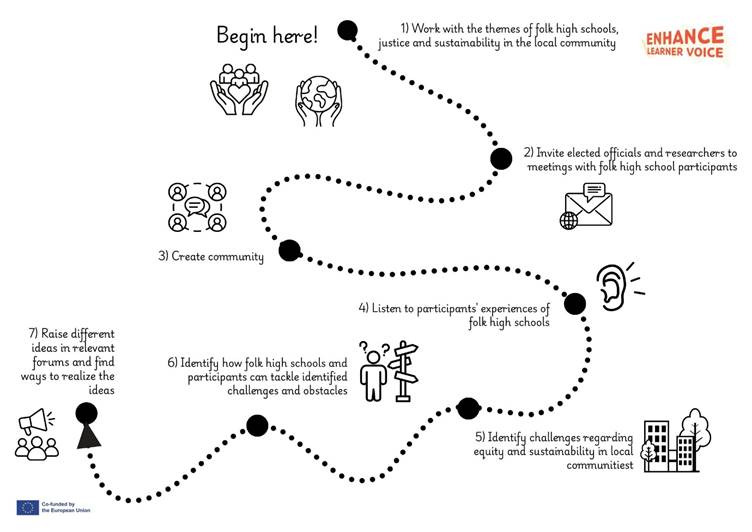
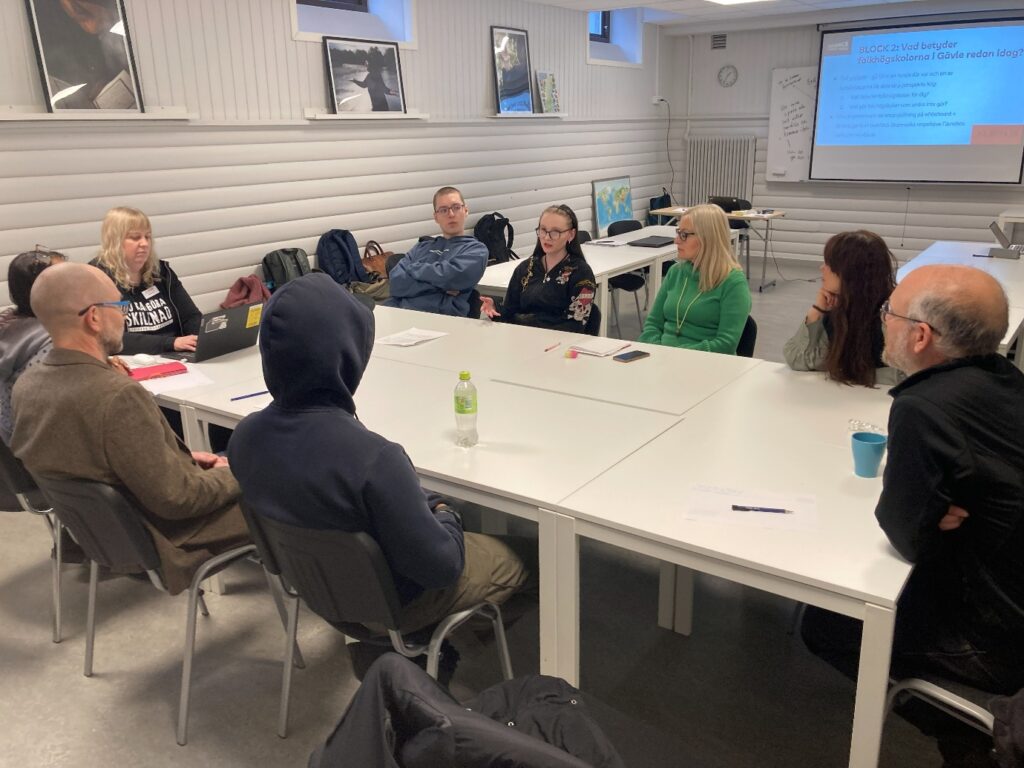
How can folk high schools contribute to a more equitable and sustainable future? This question brought together students and teachers from Brunnsvik and Färnebo Folk High Schools in Gävle, local politicians and a researcher for a workshop on 26 January 2026. Together, they explored experiences, challenges and ideas about what can be done. The event was part of the European ENHANCE project, which aims to make the voices of adult learners heard.
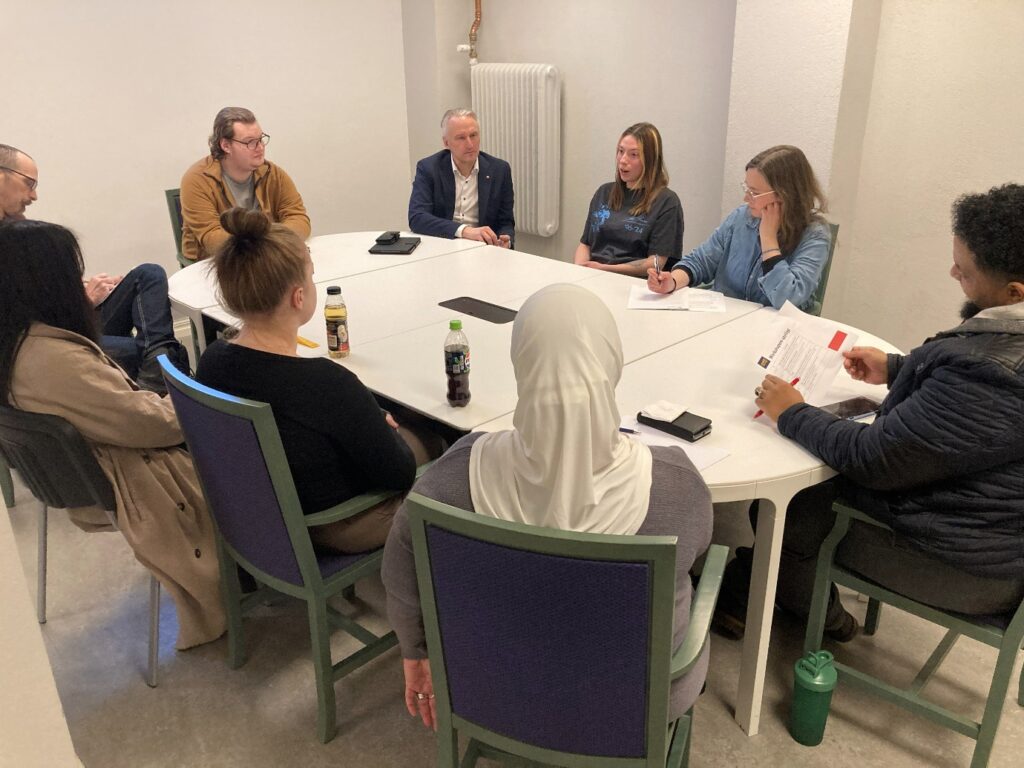
The result? A day that the participants themselves described as educational, inspiring, meaningful and engaging. And a range of practical insights into how folk high schools can strengthen their role in the local community.
Starting locally – the theme of justice and sustainability
To foster engagement, a theme was chosen that everyone could relate to:
How can folk high schools contribute to a more just and sustainable Gävle?
By highlighting both the role of the folk high school and the participants’ own experiences, it became easier to link education to broader social change. This also meant that teachers, participants, politicians and researchers all agreed to take part.
Coming together – and building a sense of community
The first step was to get to know one another. Through simple exercises, conversations and shared reflections on the question “What does a fair and sustainable Gävle mean to you?”, a foundation of trust and curiosity was established.
It quickly became clear that the diverse experiences in the room were a strength.
The folk high school as a safe space – participants’ stories
A key part of the workshop focused on listening to the participants’ own voices. Their stories painted a clear and sometimes powerful picture of what the folk high school means in their lives:
- “You get much more support here than anywhere else.”
- “I’ve never felt judged for my mental health issues.”
- “Here, I can be myself.”
- “There are no cliques here. Everyone can talk to everyone.”
- “I’m learning Swedish, I’m developing, and I want to contribute.”
- “It’sokay to havea bad day. That’s part of the learning process too.”
- “The teachers here are flexible and see the individual.”
The participants’ voices painted a clear picture:
Folk high school is not just about education. It is about community, security and opportunity.
At the same time, the contrast became clear with previous school experiences characterised by demands, a lack of support and the feeling of not fitting in.
Gävle’s challenges – as seen by those who live them
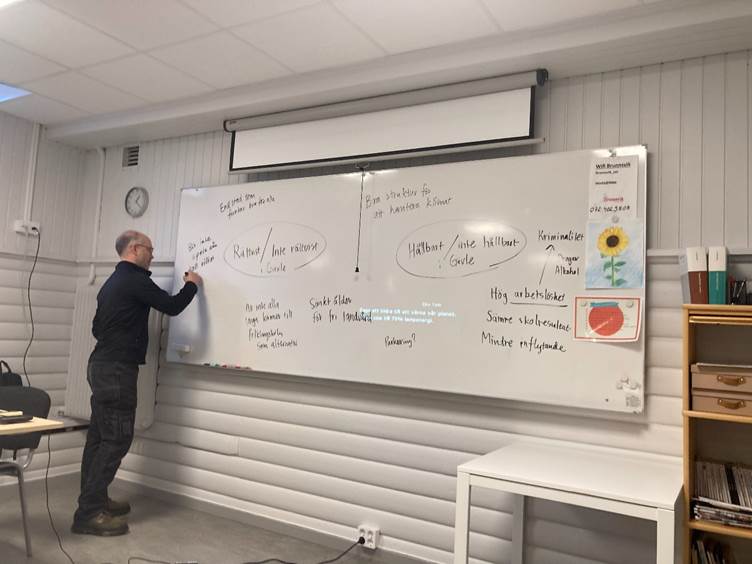
When the group identified social and environmental challenges in Gävle, a shared picture quickly emerged. Here are some of the issues that were raised:
- low levels of education
- high unemployment
- mental health issues
- segregation and insecurity
- racism
- climate change
- growing inequalities
- young people who have lost hope in collective solutions
The local politicians and the researcher gave their perspective:
The challenges are linked to over 40 years of rising inequality. They therefore emphasised the need for investment in education, social housing policy, public transport, safe meeting places and support for civil society.
And – not least – that folk high schools can play an important role in this work.
What more could folk high schools do? The group’s ideas
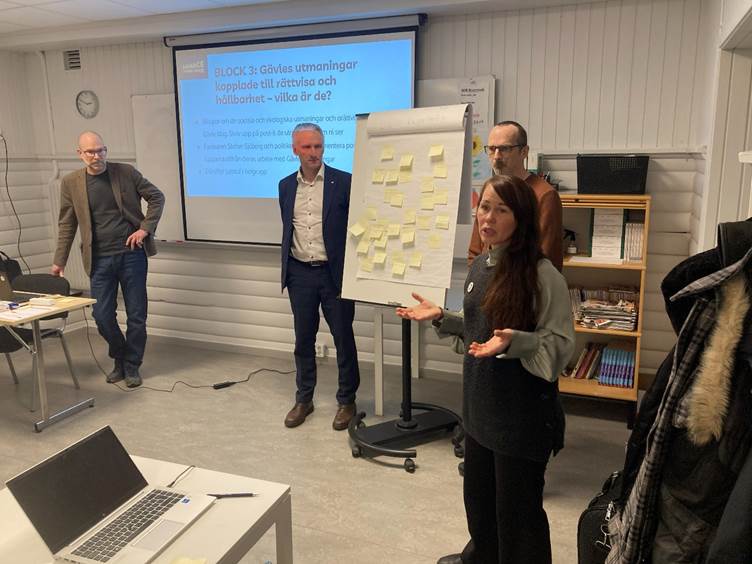
In smaller groups, participants discussed how folk high schools can make a concrete contribution to tackling local challenges. Here are some of the suggestions:
- Folk high schools are an important gateway into society for many people, particularly those not born in Sweden.
- Thanks to their independence, folk high schools can address important social issues in their teaching.
- Ahead of elections, participants can study party politics and encourage people in differentneighbourhoodsto vote.
- More activities could beorganisedin local neighbourhoods to create meeting places that transcend boundaries.
- Collaboration with civil societyorganisationsshould be strengthened.
- Politicians should be invited more often – not just in election years – to listen to participants’ experiences.
- Participants can use their knowledge of climate change to counter disinformation.
- The local authority and folk high schools can jointly develop new forms of youth participation.
The eroded public funding for folk high schools and teachers’ already high workload are significant constraints on doing more. One potential source of funding could be to initiate so-called IOP partnerships with the local authority.
The way forward – turning ideas into action
The group agreed that the ideas that had emerged must be taken forward:
- within the folk high schools’ own forums
- within civil society networks
- within political parties and local government contexts
- withinregional decision-making bodies
Conclusion: The voices of folk high schools are needed – now more than ever
What became most clear on this day was that folk high schools offer something unique: a place where people who have previously not been listened to are given the space to grow, think and make a difference.
When their experiences meet with political decision-makers, something important can happen: social change can begin on a small scale – in a classroom, in a conversation, in a shared story.